Ship customer-facing data agents inside your product
Build analytical AI agents that natively reason over structured data, rules, and customer context – and generate visual insights directly in your UI.
Great for data-heavy SaaS

[ Problem ]
Your product has rich data — but agents can’t use it as-is.
Compare revenue for Q3 vs Q4.
Thought for 1min 34s
I couldn't find the 'revenue' column. Please try again.
Customer-facing agents fail on real analytical tasks
LLMs cannot natively interpret multi-tenant schemas, custom logic, and legacy models. They guess — your product cannot.
"Exclude test data before 2021"
"Elasticity must use log-normal demand model"
"Revenue calculations exclude refunds"
"Customer segments use fiscal year boundaries"
Your domain logic lives outside your data schema
Rules, formulas, constraints, and definitions are spread across people and documentation, inaccessible to agents.
AI response
Simple chat interfaces can't deliver analytical clarity
Your users expect interactive charts, comparisons, and scenarios they can trust — not static, unverified text outputs.

[ Solution ]
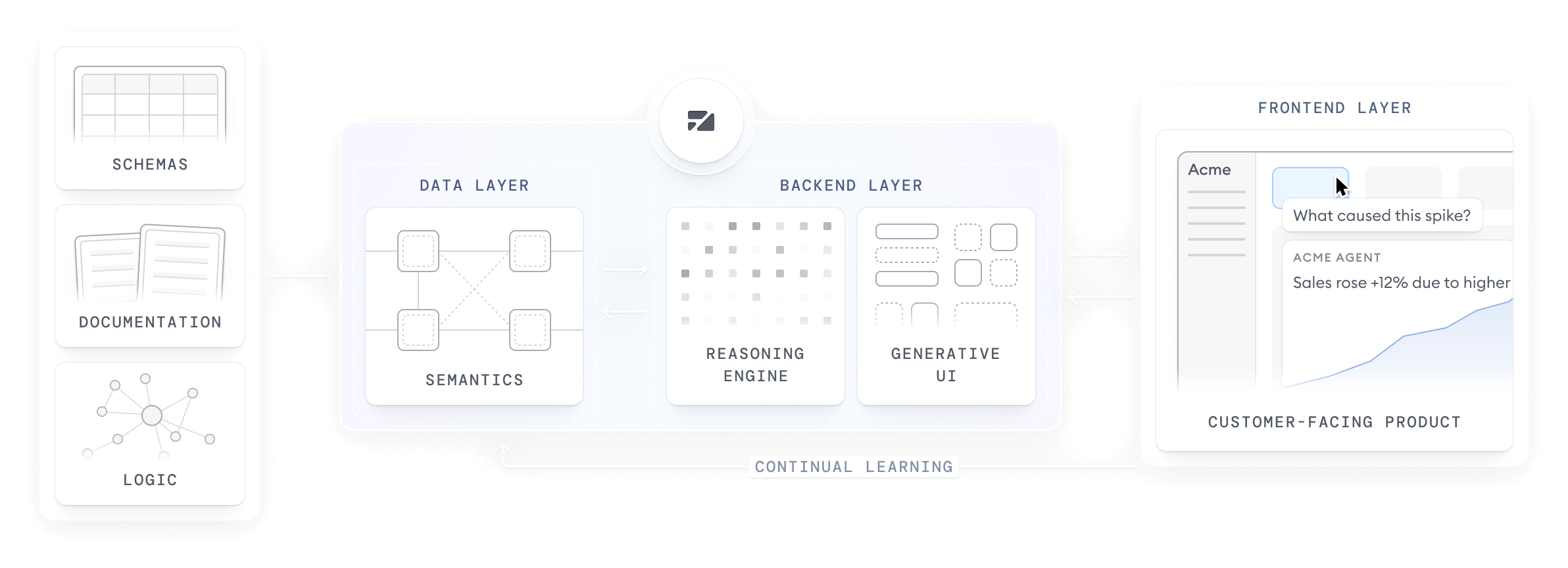
Infrastructure for data-heavy SaaS to ship production-grade data agents
A unified layer for data, reasoning, and UI generation that lets you ship reliable analytical agents — without rebuilding your stack.
Semantic data layer
Agentic reasoning
Generative UI
Enterprise runtime
Semantic data layer
Agentic reasoning
Generative UI
Enterprise runtime

Turn complex data models and rules into agent-ready knowledge




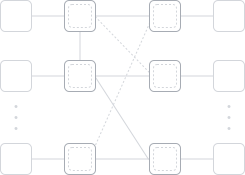
Deterministic reasoning and data operations for analytical agents
Structured visual outputs that fit natively into your product

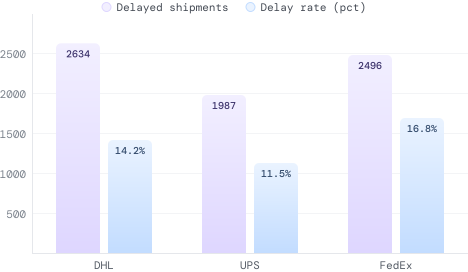
Validated components your agents can trust
A validated registry of charts, tables, comparisons, KPIs, and controls ensures agents only produce safe, renderable UI.
Works anywhere in your UI, not just chat
Agents can output charts, tables, and comparisons that you can embed inside your product — or surface through a chat interface.
Fully native to your product experience
Use your layouts, styling, and design system. Flow AI supplies the structure and validation; you own the brand.
Scalable execution layer for analytical agent workloads
Run your agents securely in your stack with zero lock-in. Use your preferred models, control execution, and deploy anywhere.
Models
OpenAI, Anthropic, Gemini, Llama, Mistral, Qwen, and more
Hosting
AWS, Azure, GCP
Deployment
On-premise or SaaS
Data residency
EU or US
[01]
models






[03]
deployment
On-prem
SaaS
[04]
data residency


[02]
hosting




[ About us ]
Built by early pioneers in AI agents
From the original generative writing assistant to industry-leading evaluation models, we've spent years turning LLMs into reliable, real-world products.

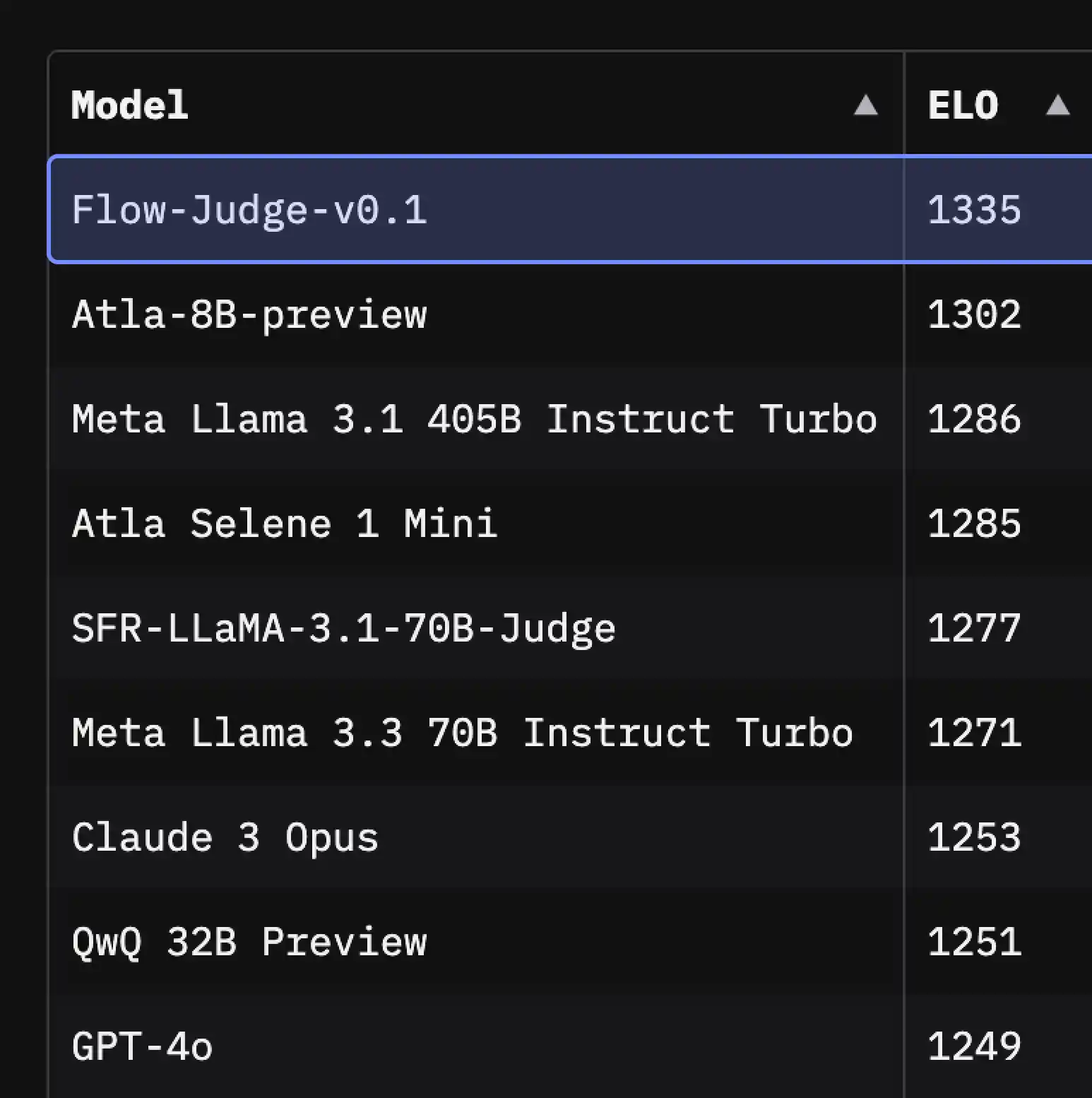


"Flow Judge evaluator model outperformed every LLM we tested for the same task."




"They helped catch failures in our agent we didn't even know to look for"

"Flow Judge evaluator model outperformed every LLM we tested for the same task."
"They helped catch failures in our agent we didn't even know to look for"




Backed by

Is your test data holding back your AI agents?
Discover how flawed test data quietly sabotages AI agent development. Learn strategies for building robust, real-world test sets.

Advancing Long-Context LLM Performance in 2025
Discover how Infinite Retrieval and Cascading KV Cache optimize LLMs for massive inputs with minimal memory and computation.

Flow Judge: Open Small Language Model for LLM System Evaluations
In-depth technical report on Flow Judge, an open-source, small-scale (3.8B) language model optimized for efficient LLM system evaluations.
[ Timeline ]
Demo to production in 3 weeks
We help you turn your existing data and tools into a reliable data agent embedded directly in your product UI.
W1
Establish the foundation
Connect to your data, extract schema, parse documentation, and build the initial semantic layer.
W2
Build reasoning and UI
Configure the agent's reasoning and the UI components it will render.
W3
Integrate and release
Embed the agent into your product, validate outputs, and ship the first version.